

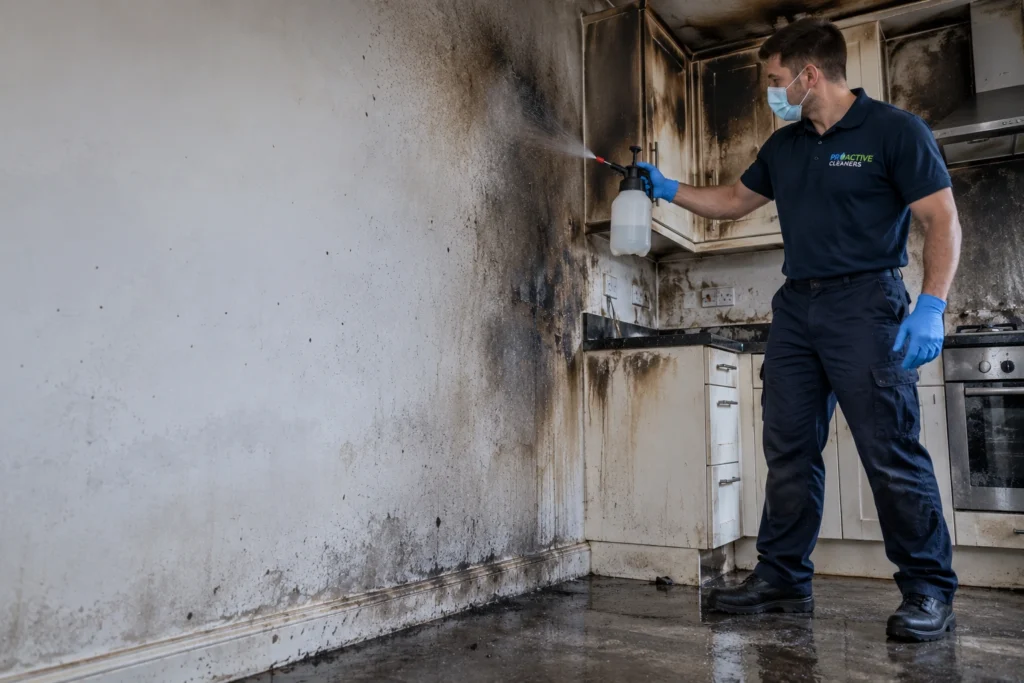
A fire does not end when the flames are out. Soot, smoke residue, lingering odours and water from firefighting can keep damaging walls, floors, fixtures and contents for days afterwards. This guide explains what fire damage cleaning involves, what to do in the first 48 hours, how professionals clean a fire-affected property, and when it is worth calling a specialist team.
What Is Fire Damage Cleaning?
Fire damage cleaning is the specialist clean-up that follows a fire, covering soot and smoke residue removal, odour neutralisation, cleaning of fire-affected surfaces and contents, and safe disposal of damaged materials. The aim is to stop the damage spreading, return the building to a safe and hygienic condition and prepare it for repair and redecoration.
It is different from a normal deep clean. Soot is fine, greasy and easily smeared, smoke particles travel into every room and soft furnishings, and the building may be unsafe or contaminated. That is why the work needs the right equipment, protective clothing and method.
The Types of Damage a Fire Leaves Behind
- Heat and flame damage: charred, melted or weakened materials that often need removing and repairing rather than cleaning.
- Soot: a fine black or brown residue that settles on every surface and can stain permanently if left. Soot can also be acidic, so it may corrode metal fittings and discolour finishes over time.
- Smoke residue and odour: smoke reaches rooms far from the fire, soaking into plasterboard, carpets, curtains and furniture. Smoke from burning plastics, cooking fat or electrical equipment leaves different residues and needs different cleaning methods.
- Water damage: water used to put out the fire soaks floors and walls. If it is not dried quickly, mould can follow. See our guide to water damage restoration and our professional mould removal guide.
What to Do in the First 48 Hours
- Wait for the all-clear. Do not go back into a fire-damaged building until the fire service confirms it is safe.
- Do not switch on damaged electrics or heating systems. Soot and water can damage equipment and create a hazard.
- Photograph everything before it is moved. Your insurer will want clear evidence of the damage.
- Contact your insurer early. Check what is covered and whether they require an approved contractor.
- Avoid wiping soot. Rubbing it with a wet cloth usually smears it deeper into paint and fabrics.
- Ventilate if it is safe, but do not move contaminated items around the property.
- Call a specialist. The sooner soot and smoke residue are removed, the less permanent staining and odour you will have to deal with.
Need fire damage cleaning now?
Proactive Cleaners provides rapid-response fire, smoke and soot clean-up for homes and businesses, with photos and handover reports to support insurance claims.
How Professional Fire Damage Cleaning Works
1. Assessment and Safety
The team inspects the property, identifies hazards, decides what can be cleaned and what must be removed, and agrees a plan with you.
2. Removing Soot and Smoke Residue
Loose soot is removed first with specialist vacuuming and dry cleaning methods, before surfaces are cleaned with products suited to the type of residue. Working from the ceiling down prevents re-contamination.
3. Cleaning Surfaces and Contents
Walls, ceilings, floors, fixtures and salvageable contents are cleaned and, where needed, disinfected.
4. Neutralising Smoke Odours
Smoke smell is not masked, it is treated at source by cleaning residue and applying odour neutralising treatments to affected areas.
5. Safe Disposal
Damaged and contaminated materials are removed and disposed of safely and legally.
6. Preparing for Repair and Redecoration
Once surfaces are clean and dry, the property is ready for repairs, decorating and refitting.
Can You Clean Fire Damage Yourself?
For a small, contained incident, such as a minor kitchen fire, careful dry cleaning with the right protective equipment can work. Our guide to how to clean soot after a fire covers the safe steps. For anything larger, or where smoke has spread, professionals are safer and usually give a better result, because soot particles are harmful to breathe and easy to spread. In older buildings, a fire can also disturb materials that need specialist handling, so get advice before any clean-up starts.
Fire Damage Cleaning for Businesses
For a business, a fire means lost trading time, so speed and clear communication matter. Commercial fire clean-up often involves landlords, insurers and loss adjusters, and a written report of the work carried out helps everyone. Once the site is restored, our contract cleaning service can keep it at the right standard.
How Long Does Fire Damage Cleaning Take?
It depends on the size of the fire, how far the smoke spread, the materials affected and whether water damage is involved. A small kitchen fire may take a day or two. Larger or multi-room incidents take longer, and drying time must be added where water was used. A reputable provider will give you a realistic timescale after inspecting the property.
Fire Damage Cleaning and Insurance
Most buildings and contents policies cover fire damage, but they vary on what counts and who must do the work. Keep photos, receipts and any reports, and speak to your insurer before throwing damaged items away. Our guide on who cleans up after a fire and who pays explains the process in more detail.
Fire Damage Cleaning With Proactive Cleaners
Our Emergency and Disaster Response Cleaning service covers fire damage cleaning, including removing soot and smoke residue, neutralising smoke odours, cleaning fire-affected surfaces and contents, safe disposal of damaged materials and preparing sites for repair and redecoration. Our emergency teams are ready to mobilise within hours, and every job ends with photos and a handover report. Read our full guide to emergency cleaning services, or request a quote today.
Frequently Asked Questions
What is fire damage cleaning?
It is the specialist clean-up after a fire, covering soot and smoke residue removal, odour neutralisation, cleaning of surfaces and contents, and safe disposal of damaged materials.
Can smoke damage be removed completely?
In most cases smoke residue and odour can be removed or greatly reduced if treatment starts quickly. Heavily absorbed smoke in porous materials may mean those items need replacing.
How soon should fire damage be cleaned?
As soon as the fire service confirms the property is safe. Soot and smoke residue can stain and corrode surfaces within days, so early action gives better results.
Is it safe to stay in a house after a fire?
Not until it has been declared safe and cleaned. Soot particles and smoke residue can irritate lungs and skin, and damaged electrics or structures may be hazardous.
Does home insurance cover fire damage cleaning?
Usually yes, because cleaning is part of putting right fire damage, but policies differ. Contact your insurer before work starts and keep records of everything.
Do you clean fire damage in commercial buildings?
Yes. Proactive Cleaners clean fire-damaged offices, shops, warehouses and other commercial premises, with reporting to support insurance claims.


